Lukla Tenzing Hillary Airport – The Gateway to Everest
Introduction: The Edge of Civilization
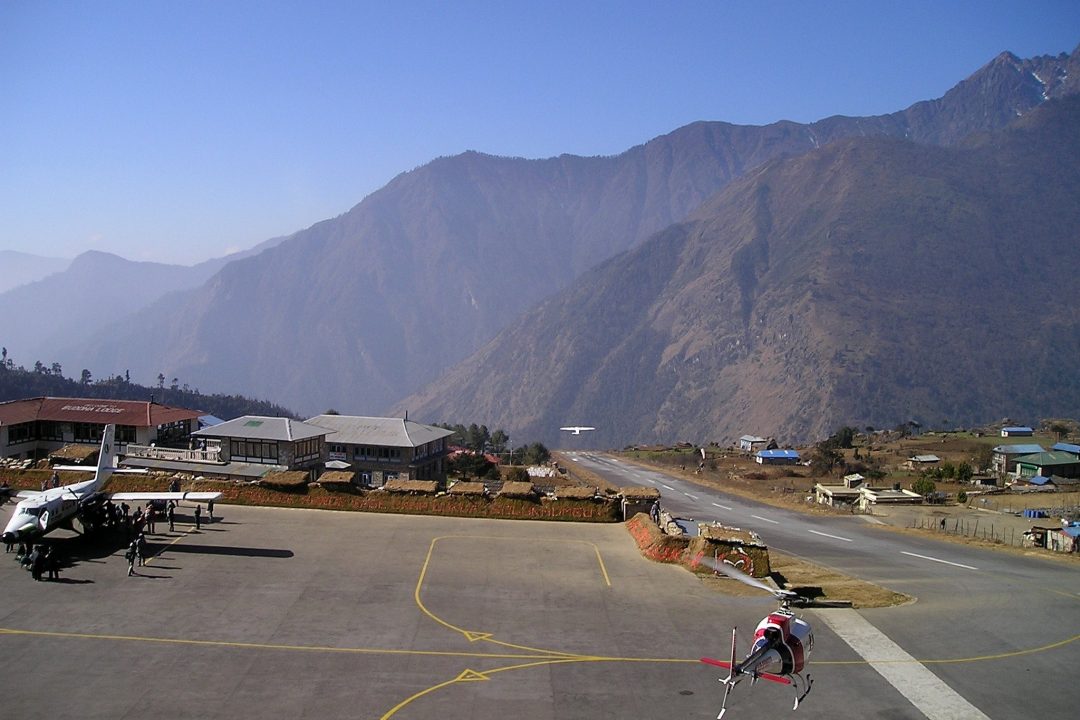
One of the most renowned and risky airports in the world is Lukla Tenzing Hillary Airport. It is constructed on a narrow strip of land cut out of the mountains, and this makes it exciting and challenging to the pilots. However, for trekkers who visit the famous Everest base camp (EBC), and for peak climbing like Everest, Mera Peak, Island Peak, and Ama Dablam, it is the most significant entrance point to the Himalayas.
The airport is located at 9,334 ft (2,845 m) above sea level, and it was initially named Lukla Airport. It changed its name in 2008 in memory of Edmund Hillary and Tenzing Norgay, who became the first to reach the top of Mount Everest.
Any landing and take-off at Tenzing Hillary Airport is an adventure. It is a small but risky starting point of the most renowned trek in the world, and it provides a unique view of the mountains before travelers set off on their journey.
Anatomy of a Dangerous Runway
The Physical Constraints
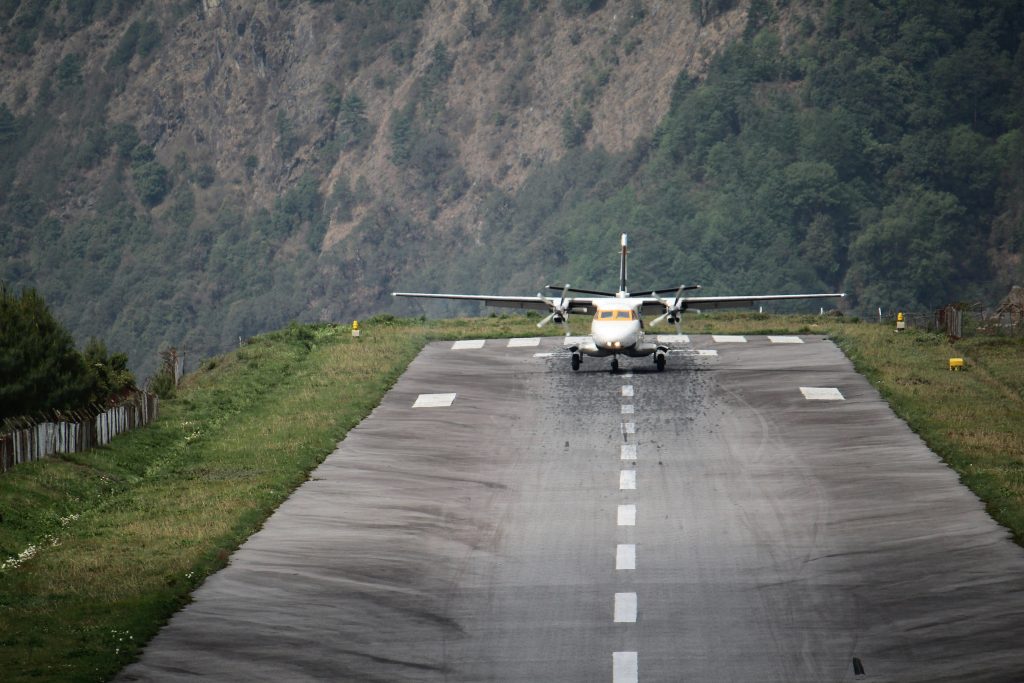
Tenzing Hillary Airport of Lukla is constructed in one of the most problematic places in the world. It is situated on a steep runway, for which the 12 percent slope is calculated in order to enable the planes to decelerate rapidly during landing and accelerate during takeoff. This distinctive design is required due to the limited space on the mountain ridge.
The runway is also quite short, measuring 1,729 feet (527 meters) in length, and this is very short in relation to most international airports that have a 10,000-foot runway. Each landing, in this case, requires much skill, accuracy, and timing on the part of the pilot.
The “No Second Chance” Factor
There is no room for error when flying into the Tenzing Hillary Airport of Lukla. There is a steep mountain wall at the northern end of the runway, and this implies that pilots have to land successfully on the first attempt. The surrounding terrain does not offer an opportunity to have a second attempt due to space and a lack of opportunity.
There is a sheer thousand-foot drop into the valley on the south end, and the taking off is just as exciting and dangerous. One wrong move could be disastrous, so every landing and departure requires absolute precision and confidence from the pilot.
Operating Aircraft
Lukla has a short and sloped runway, which means that only special types of planes can fly to Lukla. The STOL (short takeoff and land) aircraft are used in most of the flights, and these are designed to operate safely on short runways. The majority of the planes in use are the Dornier Do 228 and the de Havilland Canada Twin Otter.
These small and powerful planes are able to cope with harsh conditions, steep landings, and sudden halts that are demanded at Tenzing Hillary Airport. They are small and reliable, and therefore, they are the most appropriate for ferrying passengers and supplies to the core of the Everest region.
Operational Challenges: Fighting the Elements
Extreme Weather Conditions
The climatic conditions in Tenzing Hillary Airport are very unpredictable. It may fluctuate in a matter of minutes; one minute it is pure and sunny, and the next minute it is full of fog, clouds, or fierce cross winds. Such unpredictable developments tend to delay or cancel flights.
The other significant problem is that Lukla is operated under VFR (Visible Flight Rules), which implies that there are no sophisticated navigation systems on the planes. The visibility of the pilots will be full to enable them to take off or land safely. In case of clouds or fog on the runway, there is no chance of flying, and each flight to Lukla is subject to weather conditions.
Pilot Expertise
Lukla Tenzing Hillary Airport is not an airport that ordinary pilots can fly into. Only specially certified and trained people can fly here. The pilots go through numerous practice flights and demonstrate that they are able to cope with the short runway, steep approach, and unpredictable weather conditions.
The co-pilot is also very crucial in the flight. They are used as a spotter; they assist the main pilot in estimating the distance, verification of visibility, and they also make sure that the aircraft is perfectly aligned to the runway. Working together and accuracy between the two pilots in such a risky environment are important in ensuring every landing and takeoff is safe.
The Impact on Travel Plans
Due to the unpredictable weather conditions in Lukla, delays and cancellations of flights are very frequent. Strong winds, clouds, or fog may cause all flights to be halted for hours or even a day. It is because whenever trekkers are planning to visit the Everest Base Camp, they would always be advised to include one or two days as buffer days in their travel plans.
Flights are usually diverted to Ramechhap Airport (Manthali), some 45–50 kilometers away from Kathmandu, during the peak trekking season or in unfavorable weather. This assists in minimizing the air traffic and allows additional opportunities for flights to be conducted safely. But it also implies that the travelers will have to be adaptable and prepared to make adjustments to their schedule.
A Tribute to the Pioneers: Historical Context
How the Airstrip was Built
Tenzing Hillary Airport started with the vision of Sir Edmund Hillary to give back to the Sherpa community, following his victory on the Everest climb in 1953. He aimed at making the Khumbu region more accessible to the other parts of Nepal; hence, he thought of constructing an airstrip in Lukla.
The building was not an ordinary one. According to local narrations, Hillary purchased the farmland from the farmers with the use of liquor because money was not worth anything then. The local Sherpas then flattened the runway with bare hands using crude tools and even tramping the runway, flattening heavy rocks in the process. They have made a remote mountainside one of the most iconic airports in the world, with limited resources, and their dedication and teamwork.
The Naming and Legacy
In 2008, the Lukla Airport was renamed to Tenzing Hillary Airport in honor of Sir Edmund Hillary and Tenzing Norgay Sherpa, the first people to climb to the top of Mount Everest in 1953. The name is not just a symbol of their legendary ascension, but a symbol of their contribution to the Khumbu region that has become permanent. Hillary and Tenzing assisted in the construction of schools, hospitals, and infrastructure, which changed the lives of the locals.
Lukla was a remote village with limited access before the construction of the airport started. Today, up to 50 flights this airport to make it convenient for various trekkers and climbers all over the world.
The Traveler’s Experience: From Takeoff to Tarmac
The Flight from Kathmandu (or Ramechhap)
The flight to Lukla is short but unforgettable. It usually takes about 30 to 45 minutes, departing either from Kathmandu or Ramechhap Airport (Manthali), depending on the season and weather conditions. The flight journey offers breathtaking views of the Himalayan ranges, green valleys, and tiny mountain villages scattered below.
As the plane moves closer to the mountains, many passengers feel a mix of excitement and nervousness. It’s not just a flight—it’s the first thrilling step toward the adventurous journey in the Everest Region.
The Landing
The landing at Lukla Airport is both thrilling and terrifying. The plane makes a steep descent toward the short runway, and within seconds, the wheels hit the tarmac just a few feet from the cliff edge. Passengers often hold their breath until the plane comes to a stop—then, almost every flight ends with a round of relieved applause and big smiles all around.
Arrival and First Steps
Stepping off the plane at Lukla, travelers immediately feel the high altitude and the need to take it slow and acclimatize. Lukla is also a bustling hub for Everest Base Camp trekkers, with tea houses, trekking permits, and porters ready to help. It’s the perfect place to rest, prepare, and begin the adventure into the Himalayas.
Essential Tips for Flying into Lukla
Booking Strategy
- Book the flight in advance, especially during the high trekking season(Spring and Autumn).
- Allow 1-2 extra days in your itinerary to account for flight delays due to incase bad weather interrupts the flight.
- Book only through the trusted tour operator.
Preparation and Mindset
- There is a strict baggage weight limit in Lukla flights( 10kg main and 5 kg hand luggage).
- You need to be calm and have patience during delays.
Safety Record
- Despite the danger, the safety record of the Lukla flight is strong. Keep calm during the landing and take-off.
Conclusion: More Than Just an Airport
The Lukla flight is part of the Everest Region Adventure. No matter if you are planning to do a trek or do peak climbing, you need to take a Lukla flight, as traveling to Lukla by road is time-consuming, and the road is still under construction.
FAQ
How Much Does it Cost for a Lukla Flight?
- Foreign Citizens: Around USD 227 per person, one-way
- Indian Citizens: Approximately INR 17,700–17,800, one-way
- Nepalese Citizens: Around NPR 10,602, one-way
Note: The exact cost varies depending on the season and availability. For the latest price, you can visit the airline’s website.
How long does it take to reach Lukla Airport from Kathmandu?
- Kathmandu to Lukla Flight Duration: Approximately 30–35 minutes
- Ramechhap Manthali Airport to Lukla Airport: Around 25–30 minutes