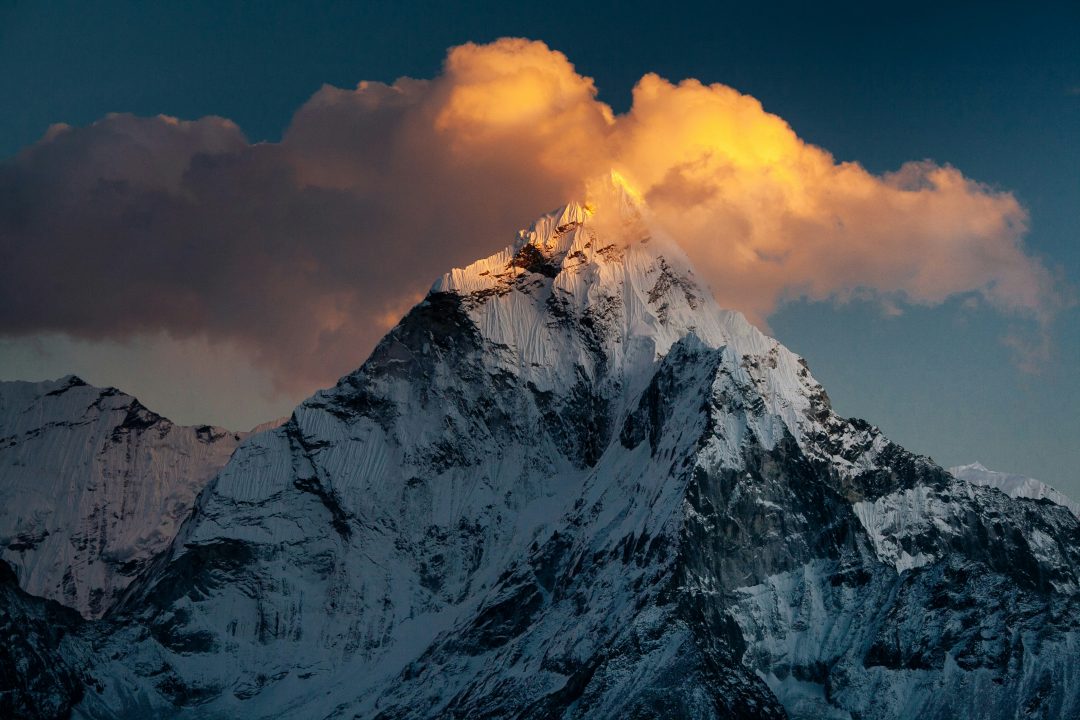

Ama Dablam Peak Climbing - 22 Days

Ama Dablam Peak Climbing 22 Days

Ama Dablam Peak Climbing Highlights

  • Thrilling flight into Tenzing-Hillary Airport (Lukla) and landing on a short, iconic runway.
  • Explore the famous capital of Namche, Namche Bazaar and other Sherpa villages.
  • Visit the Tengboche Monastery to receive blessings.
  • Arrival at Ama Dablam Base Camp (ADBC) and witness a traditional ceremony led by the team to the mountain god.
  • Icefall Training and Gear Prep near Base Camp(prussiking, rappelling, ladder crossing)
  • Stand at the Ama Dablam summit crossing C1, C2, and C3 and enjoy the breathtaking view of the entire Khumbu region and other high altitude peaks like Mount Everest (8,848m), Lhotse (8,516m), Makalu (8,481m), Cho Oyu (8,188m), and Nuptse (7,861m).
  • Celebrate the success with the Everest Delight Team and return to Kathmandu with the Lukla Flight.
  • Duration22 Days
  • Max. Altitude6,812-meter
  • Trip GradeChallenging
  • Group Size -
  • Meals Breakfast, Lunch And Dinner
  • AccommodationTea house/Tent

The Nepal skyline has several mountains that are remarkable, and then there is Ama Dablam. The beautiful and ideally-shaped peak, which is known as the mother necklace, is commonly referred to as the Matterhorn of the Himalaya. It is considered to be one of the most beautiful mountains in the Khumbu region, which every mountaineer who passes the trail to the Everest Base Camp dreams of climbing its beautiful ridges.

At the Everest Delight Tour Company, we are confident that good preparation, optimum acclimatisation and effectiveness in safety management are the routes to success on Ama Dablam. Our 22-day itinerary will give you time to ascend steadily but gradually over the Khumbu Valley, have adequate time to rest and rotate between Camp I, II, and III to build strength before the ultimate summit push.

Our team of certified Sirdars and experienced Sherpa guides who have reached Ama Dablam multiple times will guide you. They are familiar with each part of the route, steep ice and rock faces, and the technical fixed ropes. Our professional assistance, efficient logistics and safety-first attitude ensure that you remain focused on the climb, yet we take care of all the details to make your journey a successful and smooth one.

Ama Dablam Peak Climbing is not only a trek, it is an actual mountaineering adventure. The 22-day Ama Dablam climbing package is a special package that is organised to suit experienced climbers who are interested in a challenging and rewarding trip to the summit of this 6,812-meter mountain. It takes concentration, physical fitness, and admiring the high Himalayan surroundings.

Requirements For Ama Dablam Peak Climbing

Age: To obtain the Ama Dablam Peak, all the participants must be a minimum of 16 years old.

Experience: Participants must have previous high-altitude technical climbing experience with knowledge of mountaineering skills. This peak is not suitable for first-time climbers.

Physical Fitness: Climbers must be able to walk daily for an average of 5 to 7 hours, and during the summit push from base camp, you must be able to walk for around 8-10 hours.

Medical Fitness: Climbers should be in good health conditions and must be free from serious illness such as heart disease, lung and other respiratory problems. If you have a history of altitude sickness, then you must consult with the Doctor first and take necessary precautions.

Oxygen Level: While checking the oxygen level before the summit, it must show above 95%. We also suggest you check the oxygen level regularly during the journey by carrying a pulse oximeter.

Health certificate: You are required to provide us with a valid health certificate issued within 1 to 2 months before joining the trip.

Travel Insurance: It is compulsory to have health and travel insurance, and you need to provide us with proof of travel insurance before heading on the trip.

Team Spirit: All the climbers should follow the safety and guidelines strictly set by the Everest Delight team leader and other crew staff. You should respect your fellow climbers, porters and be cooperative with the Everest Delight team.

General Info About  Ama Dablam Camp-by-Camp to the Summit

Camp I (C1): 

The arduous initial climb from ADBC up the grassy slopes and exposed slabs, leading to Camp I (5,700m). C1 often feels like a refuge, positioned just above the initial technical difficulties. Spending days carrying loads and familiarise oneself with the hundreds of feet of fixed ropes that permeate the route, transitioning from trekking to vertical mountaineering.

The Grey Tower & Camp II (C2): 

The climb to Camp II (6,300m) involves sustained vertical climbing. This section includes the infamous Grey Tower, a series of demanding, exposed granite pitches that require excellent rope work and stamina. The reality of C2: pitched precariously on small snow ledges, offering utterly exposed but unparalleled views of the surrounding giants like Makalu and Cho Oyu. The most famous technical obstacle: a sheer, near-vertical granite slab near the approach to C3. Climbing this section requires immense upper-body strength and precision, often done while carrying heavy loads.

The Knife-Edge Ridge to Camp III (C3): 

Establishing the final staging post at 6,800m. This ridge is severely exposed, narrow, and often icy, requiring extreme mental focus even when preparing for the summit bid. Constant awareness of the namesake feature—the hanging glacier (the “Ama Dablam”) beneath the summit. Expedition success relies heavily on stable conditions and minimising time spent directly beneath this feature.

Summit Push: 

Leaving Camp III in the deep cold darkness (around 1:00 AM), relying solely on headlamps for illumination as the team begins the highest and most exhausting leg of the journey. The final 400 vertical meters involves navigating steep, hard blue ice and snow flutes, requiring meticulous footwork using crampons and dual ice axes. Standing atop the pyramid, witnessing the unparalleled 360-degree panorama: the entire Khumbu region lay bare, with Everest, Lhotse, and Makalu dominating the horizon in the golden sunrise light.
When To Go For Ama Dablam Peak Climbing

Ama Dablam Peak Climbing – 22 Days
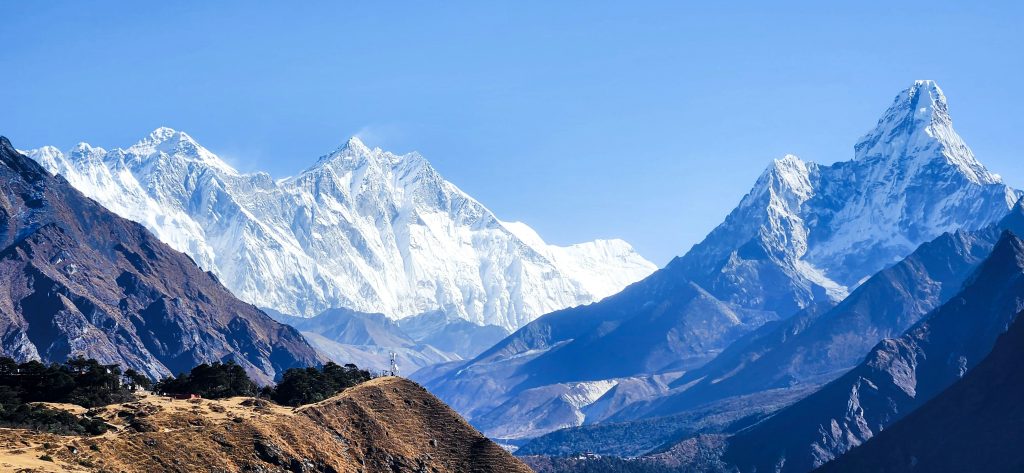
View of Everest, Lhotse and Ama Dablam

Choosing the best time for the Ama Dablam Peak Climbing is not a priority but a crucial factor to make the journey successful and enjoyable. The best season for peak season for Ama Dablam Peak Climbing is during the month of spring and autumn seasons, and here is why:

Autumn(Late September to Late October):

  • Atmospheric Stability: Among other seasons throughout the year, the weather in the autumn remains mostly stable, and you can expect clear skies. Due to perfect weather conditions, you can enjoy the breathtaking view of Everest, Lhotse, and Makalu. 
  • Ideal Temperatures (Relatively): Even though mountains remain cold, the temperature at the lower altitude in autumn remains mild and moderate. You can enjoy your trek to the base camp without facing extreme cold.
  • Consolidated Snow and Ice: New snow deposited at the end of the monsoon reduces the risk of avalanche, and climbers can push for the summit under secure and stabilised conditions.

Note: Due to stable and best weather conditions, a huge number of people go for expeditions and treks in the Khumbu region. So early booking of flights, permits and accommodation is recommended. 

Spring(Late March to Early May):

  • Warmer Lower Altitudes: Another best time for the Ama Dablam Peak Climbing is during spring, and people love to travel in these seasons to witness the rhododendron forest trail and lush greenery. The days are warmer in the daytime and become mild at night.
  • Less Traffic (Initially): Due to the start of trekking season, you can expect less crowd in the starting month compared to peak October.
  • Longer Daylight Hours: The advancing summer means climbers can use the benefit of a long period of sunlight. Climbers can reach the destination by maximising usable climbing time.

Note: In spring, the chances of heavy snowfall and sudden weather change are possible, so we suggest you monitor the weather forecast before heading out and during the climb.

Required Permits For Ama Dablam Peak Climbing

Permit TypeIssued ByPurposeApproximate Cost (USD)
Ama Dablam Climbing PermitNepal Mountaineering Association (NMA)Official climbing authorization for Ama Dablam$400 (Spring) / $200 (Autumn) / $100 (Winter & Summer)
Sagarmatha National Park Entry PermitDepartment of National Parks and Wildlife ConservationEntry to Sagarmatha National Park area$30 per person
Khumbu Pasang Lhamu Rural Municipality PermitLocal Rural Municipality Office (Khumbu Region)Local area entry fee for the Khumbu region$20 per person

Note: Permit cost will be included in the package when you book with us. We will handle all the permits for you to make your Ama Dablam climbing journey smooth, hassle-free, and well-organised.

Itinerary

  • Day 01: Kathmandu to Lukla flight and trek to Phakding

    • Flight duration: Approximately 30-35 minutes.
    • Trek duration: 3-4 hours
    • Early morning scenic flight from Kathmandu with a thrilling landing at Lukla airport.
    • Start your first trek towards Phakding (2,610m).
    • Follow the Dudh Koshi River, cross a suspension bridge, and pass small villages like Chheplung and Ghat.
    • Reach Phakding and stay overnight at the tea house.
    Altitude: 2,610 meters
    Meals: B,L,D
    Accommodation: Tea house
  • Day 02: Phakding to Namche Bazaar trekking

    • Trek duration: 6 to 7 hours
    • Walk through beautiful pine and rhododendron forests.
    • Pass through Tok Tok, Benkar, and Monjo village.
    • Your permits will be checked at Monjo, and then enter the Sagarmatha National Park.
    • Cross the famous Hillary Suspension Bridge, which is approximately 140 meters long.
    • Reach Namche and stay overnight in the best available tea house.
    Altitude: 3,440 m
    Meals: B,L,D
    Accommodation: Tea house
  • Day 03: Rest and acclimatisation day in Namche

    • Purpose of the Day: To adjust your body to high altitude
    • Trek Duration: 2 to 3 hours, short hike
    • Morning Activities: Hike to Everest View Hotel to enjoy the best view of Mount Everest, Lhotse, Ama Dablam, Thamserku, and Kongde Ri. You can also enjoy breakfast here by paying a cost of around 30 USD per person. You will also have the option to visit the Hillary School and the ancient monastery in Khunde and Khumjung Villages.
    • Afternoon Activities: Enjoy lunch after returning from the morning hike. After this, you are free to explore on your own. You can visit the Sherpa Museum, local markets or spend time at local cafes or restaurants.
    • Spend your night in Namche tea house.
    Altitude: 3,440 m
    Meals: B,L,D
    Accommodation: Tea house
  • Day 04: Trekking from Namche Bazaar to Deboche

    • Trek duration: 5 to 6 hours
    • After breakfast, follow the scenic trail to Kyangjuma while enjoying the panoramic view of mountain peaks.
    • Cross a suspension bridge over the Dudh Koshi River.
    • Steep uphill climb through a rhododendron and pine forest toward Tengboche.
    • Visit the famous Tengboche Monastery, get blessings and enjoy the breathtaking views of Ama Dablam.
    • Arrive in Deboche and spend the night in a tea house.
    Altitude: 3,820 meters
    Meals: B,L,D
    Accommodation: Tea house
  • Day 05: Deboche to Pheriche trek

    • Trek Duration: 5 to 6 hours
    • After breakfast, follow the trail along the Imja Khola River.
    • Cross the suspension bridge over the Imja Khola.
    • Ascend to the beautiful village of Pangboche
    • Visit the Pangboche Monastery
    • Continue trekking through alpine landscapes and enjoy incredible views of Ama Dablam’s southwest face as you approach Pheriche.
    • Stay overnight in the Pheriche tea house.
    Altitude: 4,371 meters
    Meals: B,L,D
    Accommodation: Tea house
  • Day 06: Acclimatisation and exploration day at Pheriche

    • Purpose of the Day: Important day for acclimatisation as you are already at around 4,240m
    • Trek duration: 2 to 3 hours, short acclimatisation hike
    • Morning Activities: After breakfast, you will visit either Nagarjun Hill (around 5,050m) to enjoy breathtaking panoramic views of Ama Dablam, Lhotse, Makalu, Cho Oyu, and surrounding peaks.
    • Afternoon Activities: Return to Pheriche after the morning hike for lunch.  Take enough rest and sleep well.
      Stay in the Pheriche tea house.
    Altitude: 4,371 meters
    Meals: B,L,D
    Accommodation: Tea house
  • Day 07: Trekking from Pheriche to Ama Dablam Base Camp

    • Trek Duration: 4 to 5 hours
    • After breakfast, leave the Everest base camp trail and head toward the Ama Dablam Base Camp
      Follow the trail to Pangboche, passing through small chortens and mani walls.
    • From Pangboche, take a diverging route that leads directly toward Ama Dablam Base Camp.
    • Enjoy magnificent views of Ama Dablam, Everest, Lhotse, Nuptse, and Thamserku on the route to base camp.
    • Arrival at Ama Dablam Base Camp and check into the tea house.
    • Your Sherpa climbing team will briefing about the climb, safety protocols, and equipment preparation.
    • Spend the night in the Ama Dablam tea house.
    Altitude: 4,700 meters
    Meals: B,L,D
    Accommodation: Tea house
  • Day 08-18: Summit Ama Dablam and return to base camp

    During these days, you will prepare, acclimatise, and attempt the summit of Ama Dablam. The climb involves several rotations between Base Camp, Camp I (5,700m), Camp II (6,100m), and Camp III (6,300m) to adjust to the altitude and ensure safety.

    Once fully acclimatised, you’ll make the final summit push, starting early in the morning. The climb includes steep ice, rock, and snow sections fixed with ropes. Reaching the Ama Dablam summit (6,812m) rewards you with breathtaking 360° views of Everest, Lhotse, Makalu, Cho Oyu, and the entire Khumbu region.

    After celebrating your success at the top, you’ll descend carefully back to Base Camp, where you’ll rest and recover after this unforgettable achievement.

    Altitude: 6,812 meters
    Meals: B,L,D
    Accommodation: Tent
  • Day 19: Trek from Ama Dablam Base Camp to Tengboche

    • Trek Duration: 4 to 5 hours
    • Descent toward Tengboche passing through yak pastures and open meadows.
    • Cross the Imja Khola River and pass through Pangboche village.
    • Arrive at Tengboche and spend the night in a tea house.
    Altitude: 3,867 meters
    Meals: B,L,D
    Accommodation: Tea house
  • Day 20: Tengboche to Namche Bazaar

    • Trek Duration: 4 to 5 hours
    • Follow the trail on a steep descent through rhododendron and pine forests to reach Phunki Tenga.
    • Cross a suspension bridge and make a gradual climb to Kyangjuma
    • Continue to walk toward Namche Bazar, passing prayer flags and mani walls.
    • Reach Namche Bazaar and relax.
    • Spend the night in Namche Bazar tea house.
    Altitude: 3,440 m
    Meals: B,L,D
    Accommodation: Tea house
  • Day 21: Trekking from Namche to Lukla

    • Trek Duration: 6 to 7 hours
    • Cross multiple suspension bridges over the Dudh Koshi River.
    • Pass through beautiful Sherpa villages such as Monjo, Benkar, Tok Tok, and Phakding.
    • Enjoy your final trek in the Khumbu region.
    • Spent overnight in the Lukla lodge.
    Altitude: 2,860 m
    Meals: B,L,D
    Accommodation: Tea house
  • Day 22 : Flight from Lukla to Kathmandu

    • Flight Duration: Around 30–35 minutes.
    • Enjoy the mountain aerial views and land in Kathmandu International Airport.
    • Transfer to the hotel.
    Altitude: 1,400 meters
    Meals: B,L,D
    Accommodation: Tea house

Inclusion

What's included ?

  • Comfortable accommodation at the best available hotels or tea houses during the trek.
  • Clean, safe, and hygienic lodges with warm Sherpa hospitality.
  • Private single-room accommodation available on request (subject to availability).
  • Nutritious breakfast, lunch, and dinner with vegetarian and non-vegetarian options.
  • Pre-climb training at Ama Dablam Base Camp with expert guidance on rope and gear use.
  • High-quality tents, sleeping mats, and camping gear for base camp and high camps.
  • Group climbing equipment including fixed ropes, harnesses, helmets, and carabiners.
  • Personal trekking gear on loan such as a sleeping bag, down jacket, duffel bag, and map.
  • Round-trip flights between Kathmandu and Lukla, including all ground transportation.
  • Experienced, licensed, and insured English-speaking climbing guide.
  • Support from local Sherpa guides and porters from the Khumbu region.
  • One porter for every two climbers (maximum load 25 kg each).
  • Professional high-altitude Sherpa climber for summit support.
  • All necessary climbing permits and entry fees for Ama Dablam and Sagarmatha National Park.
  • Rescue arrangement support including helicopter evacuation assistance in emergencies.

What's not included ?

  • Nepalese visa fee (obtainable upon arrival or online before travel).
  • International airfare to and from Kathmandu.
  • Excess baggage charges on domestic or international flights.
  • Lunch and dinner in Kathmandu before and after the trek.
  • Extra hotel nights due to early arrival, late departure, or weather delays.
  • Travel insurance with emergency rescue and medical coverage.
  • Personal expenses such as phone calls, internet, laundry, and bar bills.
  • Battery charging, hot showers, bottled or boiled water, and snacks.
  • Personal trekking and climbing gear like boots, gloves, crampons, and headlamp.
  • Tips for guides, porters, and support staff (optional but appreciated).

Notes

Ama Dablam Peak Climbing Difficulty: Understanding Its Challenging Factor

Climbing the Peak is never easy. In all the peaks in the Himalayas, you will find some sort of challenge, no matter how experienced you are. Similarly, in this Ama Dablam Peak Climbing, here are some of the top factors that add challenge, making it one of the most difficult and technically demanding. Let's see the factors:

  • Technical skill: Ama Dablam is graded as a TD (Très difficile) or "very difficult", and this Peak also has a technical climbing section, like in the Yellow Tower.
  • Demand moderate fitness level: Ama Dablam climbing takes around 18-22 days to complete, and every day, climbers need to walk around 5-7 hours, sometimes for extended hours.
  • Altitude: Another serious factor that adds to the difficulty is the involvement of walking at high altitude to reach the summit, which is 6,810 meters (22,340 ft). Low levels of oxygen and the chances of altitude sickness remain high at higher altitudes.
  • Gale-force Winds: Exposed ridges become veritable wind tunnels, making movement difficult, increasing the risk of frostbite, and adding a chilling psychological element.
  • Sudden Blizzards and Snowfall: Clear skies can give way to whiteouts, erasing the route, burying fixed ropes, and forcing immediate retreats.
  • Extreme Cold: Temperatures can plummet far below freezing, especially at night and closer to the summit, necessitating top-tier equipment and vigilance against frostbite.
  • Required mountaineering skills: This peak climbing is not for the first-time climber. You must be experienced in high technical rock/ice climbing and basic mountaineering skills.
  • Mental Fortitude and Unseen Hazards: Beyond the physical and technical demands, Ama Dablam demands strong mental fitness to deal with pressure, manage fear, and push through exhaustion.

Plan And Preparation Tips for Ama Dablam Peak Climbing

Even though Ama Dablam Peak Climbing sounds tough, if we prepare ourselves, then we can overcome the challenge to make it successful and adventurous. Here are some important tips that will be helpful for your preparation.

  • Get Experience: Before attempting to Ama Dablam, climbers should get experience in Rock Climbing, Ice Climbing, Altitude acclimatisation, Rope and Rescue Skills.
  • Choose Your Season Wisely: The prime climbing seasons are spring (March-May) and autumn (September-November). Climbing Ama Dablam Peak during these months allows you to enjoy stable weather, clear skies, and excellent visibility, making the ascent safer and the views more rewarding.
  • The Expedition Operator: For Ama Dablam, choosing the best expedition operator in Nepal, like Everest Delight, is a must. Only experienced expedition operators will handle all your permits, paperwork, guide, high camp service, emergency support, food and accommodation, and logistics for a safe, smooth, and successful expedition.
  • Budgeting: Ama Dablam is an expensive undertaking. You must manage the budget for the package and things that are not included in the package, like insurance, international flight, personal gear, visa fees, tips, and Contingency funds.
  • Physical Preparation: The mountain demands a good fitness level from the climbers, so focus on building Cardiovascular Endurance, Strength Training, and Climbing-Specific Training.
  • Learn Technical Skills: You need to practise using climbing gear and equipment. Practise using it in cold and windy conditions.
  • Invest in high-quality clothing and gear: The things that will protect you during the cold and freezing temperatures at high altitude are your clothing and gear items. So invest in high-quality climbing gear and clothing items.
  • Prepare mentally: Ama Dablam will test your mental fitness. You need to be strong mentally during tough situations like weather delays and challenging pitches. Be prepared to make difficult decisions, including turning back when conditions are unfavourable. Climb with your team, communicate clearly, and support each other. Trust your Sherpas and guides implicitly.

Food On Ama Dablam Peak Climbing: What To Expect

The Everest region is one of the most popular trekking destinations in the world due to the world's highest peak in the world, Everest. Since you follow the trails of the Everest base camp during the Ama Dablam, you will find a variety of food menus in the local tea house. This tea house offers veg and non-veg options, which you can choose from the menu. Let’s see what types of food you can expect at the tea house:

Breakfast:

  • Toast, eggs (boiled, scrambled, or fried)
  • Pancakes, porridge, or muesli with milk
  • Tibetan bread or chapati with jam or honey
  • Tea, coffee, or hot chocolate

Lunch and Dinner:

  • Dal Bhat (traditional Nepali meal) – rice, lentil soup, vegetables, and pickles (most filling and popular choice)
  • Fried rice, noodles, pasta, or spaghetti
  • Vegetable curry, potato dishes, or Sherpa stew
  • Soups like garlic soup or noodle soup (great for altitude adjustment)
  • Chicken or egg dishes in non-vegetarian options (available at lower altitudes)

Above the base, you will stay in the tent, and a dedicated cook team will arrange a meal for you. Let’s see what type of food you can expect while you are staying in a tent during the summit of Ama Dablam.

  • Freeze-Dried Meals (MREs): These are the gold standard above Base Camp. Brands like Mountain House or similar dehydrated pouches offer dinners that provide 600–1000 calories in a compact package. Favourites include pasta carbonara, chilli mac, and curry.
  • Instant Noodles & Soups: Ramen, Pot Noodle, and instant miso or chicken soup (often heavily salted) are used as quick, warming fixes that aid hydration.
  • Porridge and Cereal: Instant oatmeal packets serve as breakfast, often mixed with sugar or powdered milk for added density.
  • The Lifeline of Sugars: At extreme altitude, the body finds it difficult to process fats, and often rejects complex proteins. It defaults to the simplest fuel: sugar.
  • Drinks: Tang, hydration salts (Gatorade/Dioralyte), and hot chocolate mixes are essential for replacing electrolytes and providing rapid carbs.
  • Snacks: Energy bars (PowerBars, Clif Bars), gummy candies, and sugary gels become the primary means of caloric survival.

Note: Everest Delight will provide you 3 meals( breakfast, lunch and dinner) when you book the package with us.

Accommodation on Ama Dablam Peak Climbing: What To Expect

During the Ama Dablam Peak in the first part of your journey, you will spend your night in the local tea house. This tea house provides the facilities of rooms with basic amenities and facilities of wifi, electricity and a hot shower.

What to Expect:

  • Basic private rooms: Usually small, with two single beds (sometimes just mattresses on wooden platforms). You'll typically need your own sleeping bag for warmth, even if blankets are provided.
  • Shared bathrooms: Expect squat toilets (often outside or down the hall) and cold water for washing. Hot showers are sometimes available for an extra charge, often from a bucket or gas heater, but can be rudimentary.
  • Communal dining hall: This is the heart of the teahouse, heated by a yak dung stove (or sometimes gas). It's a social hub where climbers, trekkers, and locals gather to eat, drink tea, and share stories.
  • Food: Hearty Nepalese meals like Dal Bhat (rice, lentil soup, curry), noodles, pasta, pizza, and various egg dishes. Tea and coffee are plentiful.
  • Electricity: Limited, often available for charging devices in the dining hall for a fee.

After leaving the base camp, you will stay in the tent, which will be set up by your Sherpa climbing team. Here is what you can expect while you are staying in a tent.

Individual Sleeping Tents: Typically, two-person mountaineering tents are provided by your expedition company, used by one climber for maximum space and comfort. These will be pitched on relatively flat ground.

Large Dome Tents:

  • Dining Tent: The social hub, often heated, with tables and chairs. This is where meals are served, briefings are held, and card games are played.
  • Kitchen Tent: Run by skilled Nepali cooks, preparing a surprisingly varied and delicious menu.
    Communication Tent: Often equipped with satellite phones or internet access (for a fee) and a charging station.
  • Toilet Tents: Basic pit latrines, typically separate for male and female, located a short walk from the main camp. Hygiene is paramount.
  • Shower Tents: Rudimentary, often involving a bucket of warm water. A quick sponge bath is more common.
    Medical Tent: Some larger expeditions may have a dedicated medical tent with staff.

Facilities: Wifi, Hot Shower, Electricity During Trek

Wifi: Wifi is available in all the tea houses. Above the base camp, there will be no Wifi or internet facility. To use the Wifi at the tea house, you need to pay a cost of around USD2-3 per person.

Hot shower: You can find the hot shower facility at the tea house, and for this facility you need to pay around USD 2-5. From base camp to the summit, you won’t find the facility of hot showers.

Electricity: To charge your electronic device, you need to pay an extra fee at the tea house. While at the tent, our team will use the generator, and you can use it for charging your device.

How To Prevent Altitude Sickness On Ama Dablam Peak Climbing

The air thins dramatically above 3,000 meters (10,000 feet), and by the time you're pushing towards Ama Dablam's 6,812-meter (22,349-foot) summit, oxygen levels will be less than 50%. Since we will not be using the oxygen bottle for the summit, here are some of the important tips that can be helpful to prevent altitude sickness.

  1. Follow the Golden Rule: Acclimatisation is the key to success. Go slow, sleep low, and never skip rest days. Give your body enough time to adjust, stay hydrated, and get plenty of sleep to ensure a safe and successful Ama Dablam climb.
  2. Proper Hydration and Nutrition: Aim for 4-5 litres of water daily. Focus on easily digestible carbohydrates, proteins, and fats. Snacking consistently throughout the day is often more effective than forcing large meals.
  3. Pacing and Self-Awareness: Find a walking pattern you can maintain for hours. If you find the early symptoms of altitude sickness, such as mild headache, unusual fatigue, or a loss of appetite, don't ignore these signs. Tell your guide, take a rest to recover. If symptoms start to worsen, head to the lower region or ask for medical help.
  4. Pharmaceutical Allies(Diamox/Acetazolamide): Climbers can take this altitude sickness medicine during the expedition by consulting with the Doctor for the correct dose.
  5. Team and Leadership: Report any symptoms to your guide immediately, no matter how minor. Early intervention is key. Choose an expedition company with highly experienced, certified guides who understand Ama Dablam's specific challenges and emergency protocols.
  6. Recognising the Red Flags: Acute Mountain Sickness (AMS) is common and usually mild, but can progress to life-threatening conditions: High Altitude Cerebral Oedema (HACE) and High Altitude Pulmonary Oedema (HAPE).

Note: The ultimate cure for severe altitude sickness is descent. Never hesitate. A failed summit attempt due to a safe descent is a victory over a potentially fatal outcome.

Everest Delight Team For Ama Dablam Peak Climbing

When you choose Everest Delight for your Ama Dablam Peak Climbing, you’re not just booking a trip — you’re joining a highly experienced and professional mountain team dedicated to your safety and success. Here’s what our team consists of:

  • Expedition Leader: Certified and experienced climber responsible for leading the entire expedition.
    Climbing Sherpa Guides: Skilled high-altitude experts who assist you during the ascent, fix ropes, and guide you through technical sections of the climb.
  • Base Camp Manager: To look over logistics, communication, and coordination between the base camp and high camps.
  • Cook and Kitchen Staff: Prepare healthy, hygienic, and energy-rich meals at the base camp to keep you fueled and strong.
  • Porters / Support Staff: Carry your luggage and expedition equipment, allowing you to focus fully on your climb.

Things To Know About the Lukla Flight

Your Ama Dablam Peak Climbing journey starts from Lukla Tenzing Hillay Airport, and to reach here, you will take a flight either from Kathmandu or Ramechhap Manthali airport. The flight duration from Kathmandu to Lukla airport is around 30-35 minutes, and you need to follow the luggage weight restriction strictly. Most airlines allow 10kg (22lbs) for checked luggage and 5kg (11lbs) for carry-on. Lukla flights depend on weather conditions, so expect delays and cancellations. If the flights are repeatedly cancelled, you will have the option to reach Lukla by using the helicopter or take a jeep to Phaplu or Salleri and trek for several days to reach Lukla.

What Your Travel Insurance Must Cover

When purchasing the travel and health insurance for Ama Dablam Peak Climbing, here are things that your insurance policy must cover:

  • High-altitude rescue and evacuation (up to 7,000 meters)
  • Medical emergencies and hospitalisation
  • Trip cancellation or interruption due to unforeseen events
  • Lost or delayed baggage
  • Flight delays or cancellations (especially for Lukla flights)
  • Accidental injury or death coverage
  • Repatriation costs in case of medical evacuation

Booking and Payments For Ama Dablam Peak Climbing

All the climbers who want to participate in this adventurous Ama Dablam Peak Climbing must make a booking of 30% of the total package cost, which is revealed on our website. For the payment, you can use bank transfer, credit card, or online payment methods as provided during the booking process. Your advance payment will be used for securing the permits, flights, and logistics, so there will be no refund once you make a booking.

You can also make booking directly by contact with our tour operator:

  • Phone/Whatsapp: +977-9851058664
  • Email: everestdelightnepal@gmail.com

Equipment

Everything You Need for Ama Dablam Peak Climbing (6,812m)

🎒 Bags & Storage

  • Duffel bag (provided by the company for porters)
  • Daypack (35–45L for daily use)
  • Waterproof covers or plastic bags for gear protection

🛏 Sleeping & Warmth Gear

  • Sleeping bag rated to -20°F / -30°C
  • Sleeping liner for added warmth and hygiene
  • Heavy down jacket for high altitude and summit days

👟 Footwear

  • Waterproof, broken-in trekking boots
  • Lightweight camp shoes or sandals for evenings
  • Down booties for warmth at high camps (optional)
  • Microspikes or crampons for icy terrain

👕 Clothing

  • Trekking pants (2–3 pairs)
  • Long-sleeve trekking shirts (2–3)
  • T-shirts (3)
  • Thermal top and bottom layers (fleece or merino wool)
  • Lightweight base layer for sleeping or layering
  • Fleece or softshell trekking jacket
  • Waterproof jacket and pants (Gore-Tex or similar)
  • Gloves (one light pair + one insulated pair for summit)
  • Warm hat or beanie
  • Sun hat or cap with a brim
  • Neck gaiter or buff
  • Trekking socks (4–5 moisture-wicking pairs)
  • Comfortable underwear (3–5 pairs)

🧼 Personal Hygiene

  • Quick-dry travel towel
  • Toiletries (toothbrush, toothpaste, biodegradable soap, etc.)
  • Wet wipes or baby wipes for no-shower days
  • Hand sanitizer
  • Sunscreen (SPF 30+ or higher)
  • Lip balm with SPF
  • Toilet paper (for emergencies and nose use)
  • Zip-lock bags for organizing or waste management

💧 Hydration

  • Water bottles or Nalgenes (2–3 liters total)
  • Water bladder (optional)
  • Water purification tablets, Steripen, or filter
  • Rehydration salts or electrolyte powders

🧰 Electronics & Essentials

  • Headlamp (x2) with extra batteries
  • Camera or smartphone with power bank
  • Portable chargers or solar panel (optional)
  • Watch with alarm for early summit starts

🥾 Trekking & Climbing Gear

  • Trekking poles (highly recommended)
  • Gaiters for snow protection
  • Lightweight wash bowl and small detergent (optional)
  • Personal climbing gear (helmet, harness, ascender, figure-eight, carabiners, jumar, etc.)

🍫 Snacks & Energy Foods

  • Energy bars, chocolates, and trail mix
  • Dried fruits and nuts
  • Electrolyte or flavored drink powders
  • Favorite high-calorie snacks (available in Namche too)

💊 Medical & Safety Kit

  • Personal first aid kit (carry your own Western medicines)
  • Diamox (for altitude sickness)
  • Azithromycin or Ciprofloxacin (for infections)
  • Tinidazole or Flagyl (for stomach problems)
  • Augmentin (broad-spectrum antibiotic)
  • Blister plasters (Compeed)
  • Duct tape, Band-Aids, knee/ankle braces
  • Electrolytes or Emergen-C packets
  • Wound dressings or Tegaderm

🛒 What You Can Buy in Namche Bazaar

  • Trekking gear (Sherpa Gear, North Face, Mountain Hardwear — both originals and replicas)
  • Energy bars, snacks, and chocolate
  • Laundry detergent and hygiene products
  • Batteries, trekking poles, microspikes
  • Basic medical supplies (be cautious of authenticity)

Tip: Double-check your equipment before leaving Kathmandu. The right gear can make your Ama Dablam expedition safer, more comfortable, and more successful.


FAQs of Ama Dablam Peak Climbing

  • Where is Ama Dablam Peak Located?

    Ama Dablam is located in the Khumbu region inside the Sagarmatha National Park, a UNESCO World Heritage Site. The peak stands close to Mount Everest, and climbers follow a section of the popular Everest Base Camp trail before reaching Ama Dablam Base Camp.
  • How many days does it take to complete the Ama Dablam Peak Climbing?

    To complete the Ama Dablam Peak Climbing, it takes around 18-22 days. However, actual duration depends upon the weather conditions, acclimatisation days, and climbing pace.
  • How Much Does Ama Dablam Peak Climbing Cost?

    Depending on the size of the group, the time of year, and the degree of support, a full-service expedition (which includes a climbing permit, guides, high-camp logistics, lunches, etc.) should cost between $6,000 and or around $10,000 or more per person.
  • Can a beginner climber do the Ama Dablam Peak Climbing?

    If you are climbing for the first time, then Ama Dablam Peak is not suitable for you. You can choose the easy peaks like Yala Peak and Mera Peak, which are easy and non-technical.
  • Do we need travel insurance to undertake the Ama Dablam Peak Climbing?

    Yes, it is mandatory to show the proof of travel and health insurance if you want to participate with the Everest Delight team.
  • What things are included in the Ama Dablam Peak Climbing Package?

    Your package will cover permits, professional expedition team( licence guide, porter, cook, supportive staff), accommodation, meals, domestic flight, Climbing Equipment and Logistics, Medical and Safety Support, Wages and Insurance of the expedition team.
  • How Does Our Company Respond During Emergencies on Ama Dablam Peak Climbing?

    We use satellite phones and radios to maintain constant contact between base camp, high camps, and our Kathmandu support team. During an emergency, we will arrange an emergency helicopter for medical treatment.
  • What is the difficulty grade of Ama Dablam Peak Climbing?

    Ama Dablam is graded as Technical and Challenging (Alpine Grade TD), requiring previous high-altitude and technical climbing experience.
  • Do we need a visa to enter Nepal for an expedition?

    Yes, all foreign citizens except Indians need a visa to enter Nepal. You can apply online from your home country or get an arrival visa from Kathmandu airport. We suggest you get the visa for 30 Days for this Ama Dablam Peak Climbing, which will cost you USD 50.

Related Packages

You may like these packages too !

Our Partners

We are associated with