Kailash Mansarovar Yatra Packing List
Introduction
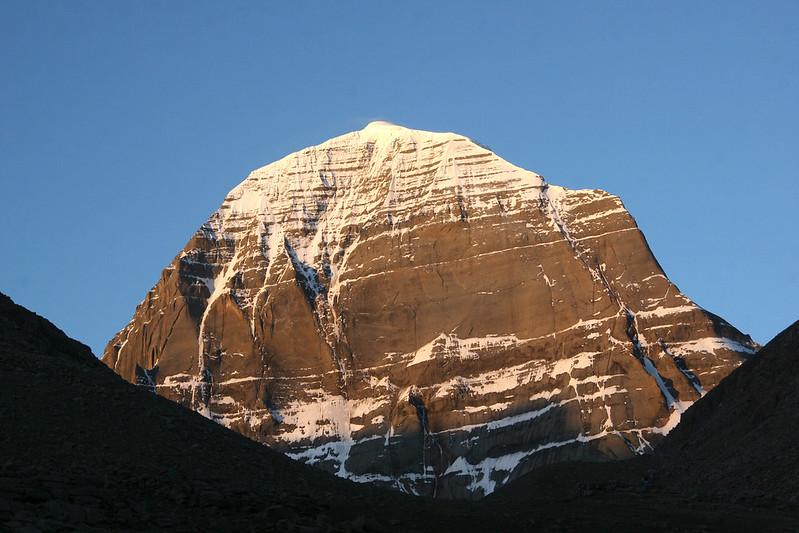
Before visiting for the Kailash Mansarovar Yatra, which is a spiritual journey in Tibet, we need to make careful preparations. This sacred pilgrimage site is located in the high altitude of over 4,500 meters (14,750 ft) and is known as the roof of the world. Tibet is famous for the years old Tibetan culture, traditions, lifestyle, monasteries, breathtaking landscape, and colorful festivals.
There are different routes for the Kailash Mansarovar Yatra, but the Nepal route is the most convenient and easiest way to reach Lake Mansarovar and Mt Kailash. Also, the visa process and getting a permit from Nepal are easy. On average, the Kailash Mansarovar Yatra Package costs around USD 2400-3000 per person.
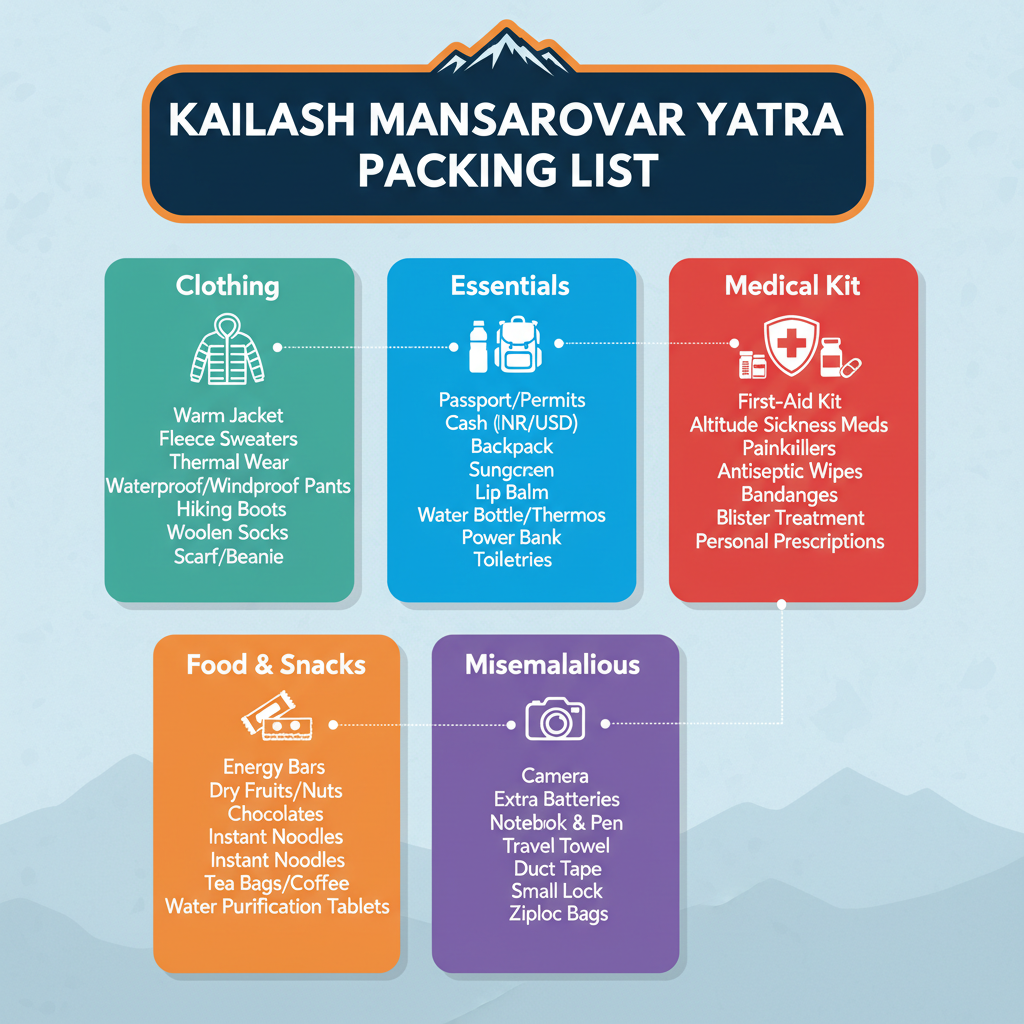
Below we have outlined the basic things that you must pack before heading for the Kailash Mansarovar Tour/Yatra.
Check out: Kailash Mansarovara Yatra Package Key Packing Categories
Essential Documents and Permits
Chinese Visa: All travellers must obtain a Chinese Visa to enter Tibet. Those who are listed as visa-free as per the Chinese government don’t need to obtain a visa, but need to obtain the Tibet Permits.
Tibet Permits: Depending upon the route you choose and a side trip, such as the Tibet Everest base, you need to obtain all the required permits.
Passport: Your passport should be valid for at least 6 months of validity from the date of departure to Tibet.
Photocopies: Make duplicates of all documents and store them separately.
Travel Insurance: Most of the tour agencies want proof of travel and health insurance from the clients, as this tour involves the risk of high-altitude trekking, medical evacuation, trip cancellation, etc.
Medication: Carry first aid, personal medicine and altitude sickness medication such as Diamox.
Clothing for All Seasons
Layering System:
Base layer: Thermal(100% wool or synthetic).
Mid-layer: Fleece jacket or down vest for insulation.
Outer layer: Waterproof, windproof jacket and pants.
Extremes Protection: Warm gloves, thick socks, thermal hat, and insulated boots rated for -20°C (-4°F).
Day Layers: Lightweight fleece or insulating vest for lower altitudes.
Modest Clothing: Long-sleeve shirts, pants (avoid shorts), and warm scarves (religious modesty is key).
Sun Protection: UV-blocking sunglasses, monkey mask, hat, and lip balm with SPF.
Trekking Gear and Supplies
Backpack: 50-70L durable backpack with a rain cover.
Sleeping Bag: Rated for extreme cold (-20°C/-4°F).
Tent and Pillow: If you are doing the Kailash Outer Kora. As per recent Chinese regulation only the Kailash Inner Kora is allowed for foreign citizens.
Water Bottles: 1-2L capacity with a water purifier or purification tablets.
Navigation Tools: Map, compass, or GPS device (battery backups—solar chargers are ideal).
Health, Hygiene, and Nutrition
Snacks: High-calorie, non-perishable items (trail mix, energy bars, dried fruits).
Hydration: Electrolyte powders and a portable water filter.
Toiletries: Biodegradable soap, hand sanitizer, dental floss, and a compact towel.
Sunscreen: SPF 50+ for skin and lip protection.
Altitude Awareness Tools: Pulse oximeter to monitor oxygen levels.
Miscellaneous Essentials
Local SIM: You can buy it from the Lhasa airport or the city area to use mobile internet and for communication.
Electronics: Headlamp (extra batteries), camera (spare SD card), Travel adaptor and portable charger.
Cash and Cards: ATMs are found only in the city areas like Lhasa and Shigatse. In remote areas, only local currency (Tibetan Yuan) is accepted.
Emergency Contacts: Printed list of local numbers, your travel agency, and family members.
Pilgrimage Gear: Prayer beads, a small shrine or offering (e.g., marigolds, incense), and a journal.
Things You Should Not Carry/Pack While Travelling to Tibet for Kailash Mansarovar Yatra
Excessive luggage: Make sure your luggage weight limit matches the airline’s weight limit.
Luxury or expensive things: We recommend that you avoid travelling to Tibet with expensive jewellery.
Alcohol and Tobacco: Strictly restricted in some Tibetan regions.
Perishable food items: Food that will be rotten due to long travel days and the journey.
14th Dalai Lama picture or things related to him: China has banned the 14th Dalai Lama in Tibet, so we suggest you not carry anything related to him.
Preparation Tips for a Successful Kailash Mansarovar Yatra
- Choose the Best Tour Operator for the Kailash Tour, as solo travel is banned here for foreign citizens
- Choose the standard itinerary and follow proper acclimatisation plans.
- Kailash Kora is challenging, so make sure to prepare physically and mentally.
Trek with a licensed Tibetan Guide for your safety. - Follow Tibetan culture rules and regulations.
- Avoid littering and throwing waste randomly in high-altitude areas.
- Check the weather conditions before heading, as the Kailash Tour is done mainly in the months of May to October.
Final Note
Kailash Mansarovar Yatra is a lifetime journey. Both pilgrims and foreign citizens can do this tour to enrich spiritual growth and experience inner peace. Connect with High Route Adventure if you are planning to do the Kailash Mansarovar in 2026, Horse Year.
Sujjest article: Food on the Trail: What You’ll Eat During the Annapurna Base Camp TrekFrequently Asked Questions(FAQs)
What clothing should I pack for the Kailash Mansarovar Yatra?
- Light cotton shirts, long‑sleeve shirts, fleece jackets, down vest, wind‑breaker, thermal inner wear, and a warm woolen sweater.
How many layers are recommended?
- Minimum three layers: base (thermal), mid (fleece/sweater), outer (water‑proof wind‑breaker).
What type of pants are best?
- Quick‑dry trekking trousers, one pair of thermal leggings, and a pair of comfortable cotton/polythene pants for camp.
Do I need a hat?
- Yes – a warm woolen cap for night, a sun‑hat or cap with a brim for daytime, and a scarf/buff for neck protection.
What footwear is essential?
- Sturdy, broken‑in trekking boots (size up by ½), a pair of lightweight sandals/flip‑flops for camp, and woolen socks (6‑8 pairs).
How many pairs of socks should I bring?
- At least 6 pairs of thick wool socks + 2–3 pairs of thin cotton socks for layering.
Do I need gloves?
- Yes – a pair of insulated waterproof gloves and a thin liner glove for dexterity.
What is the ideal backpack size?
- 45‑55 L backpack with rain cover; not larger than 60 L to keep weight manageable.
Should I carry a sleeping bag for the Kailash Mansarovar Yatra?
- In general we don’t recommend you to bring a sleeping bag as the guest house provides a blanket during the Yatra which will be enough to keep you warm. However if you want you can bring a sleeping bag rated for –10 °C to –20 °C (or a suitable winter blanket).
What personal hygiene items are must‑haves?
- Toothbrush, toothpaste, wet wipes, small soap bar, hand sanitizer, toilet paper (30‑40 sheets), and a quick‑dry towel.
Is a personal first‑aid kit required?
- Yes – basic kit: band‑aids, sterile gauze, antiseptic, painkillers, antihistamine, diarrhea tablets, blister plasters, and any personal medication. Your trekking guide also carries first aid for you.
Should I bring any altitude medication?
- The maximum altitude of Kailash Mansarovar Yatra is Dolma La Pass which is approximately (5,630 m). Reaching at such altitude you might get prone to altitude sickness so make sure to carry acetazolamide (Diamox) after consulting a doctor; also if possible keep a small portable oxygen bottle with you.
What documents must I carry for the Kailash Mansarovar Yatra?
- Passport, visa, travel permit (Yatra permit), identity proof, medical certificate (if required), and a few photocopies of each.
Do I need Tibetan Cash For Kailash Mansarovar Yatra?
- Yes – Tibetan currency which you can exchange from the airport or money exchange office in Kathmandu or Tibet city area for small purchases and tips. In remote areas, only local cash is accepted and foreign currency is also not accepted.
Is a power bank necessary?
- Highly recommended – a 20,000 mAh power bank with USB cables and a solar charger if possible.
Can I bring a mobile phone?
- Yes, you can carry a smartphone with offline maps, a local SIM, and a protective case. Remember social media such as facebook, Whatsapp, Instagram don’t work in Tibet due to strict chinese government policy.
What about a camera?
- A compact digital camera or a smartphone with a good camera; extra batteries/SD cards are a plus.
Do I need travel insurance?
- Absolutely – a policy covering high‑altitude trekking, medical evacuation, and loss of belongings.
What food items should I pack?
- Energy bars, dry fruits, nuts, instant noodles, salted biscuits, tea/coffee powder, and a small bottle of ghee or butter for extra calories.
Can I bring my own stove?
- No – camp cooking is arranged by the tour operator. Carry only personal utensils (spoon/fork) if you wish.
Do I need a water purification method?
- Yes – a portable water filter or chlorine tablets; also carry a stainless steel water bottle (1–2 L).
Is a torch/flashlight required?
- Yes – a LED headlamp with spare batteries (or rechargeable) for night camps.
Should I bring sunglasses?
- UV‑protected sunglasses with anti‑glare coating are essential for bright high‑altitude sun.
What about a personal prayer/meditation kit?
- Many pilgrims bring a small prayer book, rosary, or personal religious items – keep them in a zip‑lock bag.
Do I need a rain cover for my bag?
- Absolutely – sudden showers are common; a waterproof rain sleeve is a must.
Can I bring a laptop or tablet?
- Not necessary; limited power and rough conditions make them impractical.
Do I need a travel pillow?
- A small inflatable or compressible neck pillow can improve sleep on the bus/truck.
What about a small lock?
- Yes – a lightweight luggage lock for securing your bag during transit.
Any extra items that help with the cold?
- Hand warmers, toe warmers, a pair of ear‑muffs, and a balaclava or neck gaiter for extreme wind.